High Cortisol in Women Over 40: What It Means and What to Do

If sleep, energy, or cravings feel off lately, your nervous system may need support.
Cortisol gets blamed for a lot in midlife.
Weight gain.
Poor sleep.
Feeling wired but exhausted.
Hormone symptoms that don’t seem to settle.
If you’ve ever felt overwhelmed by the cortisol conversation online or elsewhere, you’re not alone.
And while it’s true that cortisol plays a role in many of these issues, here’s the part that often gets missed:
Cortisol itself isn’t the problem. It’s actually a hormone we need.
Cortisol is meant to follow a rhythm. Ideally, it’s lowest at bedtime so we can fall asleep, then gradually rises overnight to help us wake up feeling alert in the morning. From there, it slowly declines over the course of the day.
That rhythm is one of the ways your body knows when to rest, when to move, and when to recover. For many women in midlife, that rhythm isn’t happening optimally.
When the body spends too much time in a fight-or-flight state — under constant stress, pressure, or restriction — cortisol output can become chronically elevated at first. Over time, the system can also swing the other way, where it struggles to produce cortisol appropriately at all.
Neither pattern supports good sleep, stable energy, hormone balance, or metabolic health.
In many ways, cortisol is a flag for the state of your nervous system. If the nervous system doesn’t feel safe, the body prioritizes survival over repair. Blood pressure rises. Inflammation increases. Sleep suffers. Hormones become harder to regulate.
This is why nervous system balance is one of the core pillars of my Midlife Hormone Blueprint. It’s also why so many well-intended approaches backfire in midlife.
Restrictive dieting adds stress to an already overstressed system.
Excessive cardio keeps the body in fight-or-flight.
Even adding hormones or supplements can fall flat if the nervous system hasn’t been supported first.
What does help is creating conditions that signal safety to the body:
- consistent sleep
- adequate fuel, including enough protein and carbohydrates
- strength training rather than excessive cardio
- intentional time in parasympathetic mode (walking, gentle movement, breathwork, time offline)
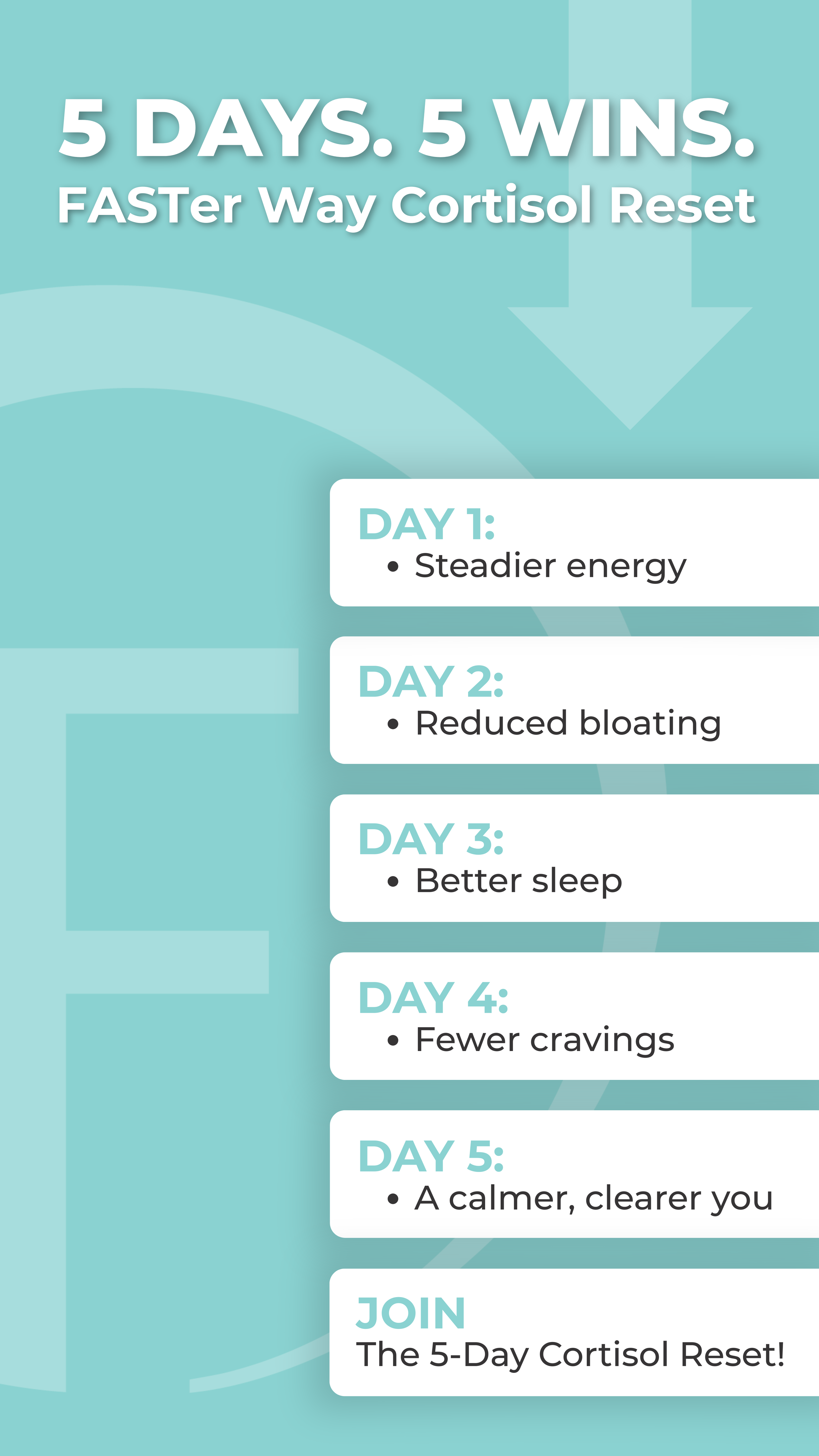
This is exactly what we focus on in my upcoming 5-Day Cortisol Reset.
Over five days, you’ll be guided through:
- strength-based workouts that support metabolism without overstressing the system
- meals and recipes that provide the fuel your body actually needs
- simple, practical education on cortisol and nervous system regulation
- daily coaching and support from me along the way
It’s not about eliminating cortisol or doing spending all day meditating or doing yoga (all impossible!). It’s about restoring rhythm, resilience, and trust in your body again.
If this resonates, I’d love to support you.
You can join the 5-Day Cortisol Reset here.